What is a mentor?
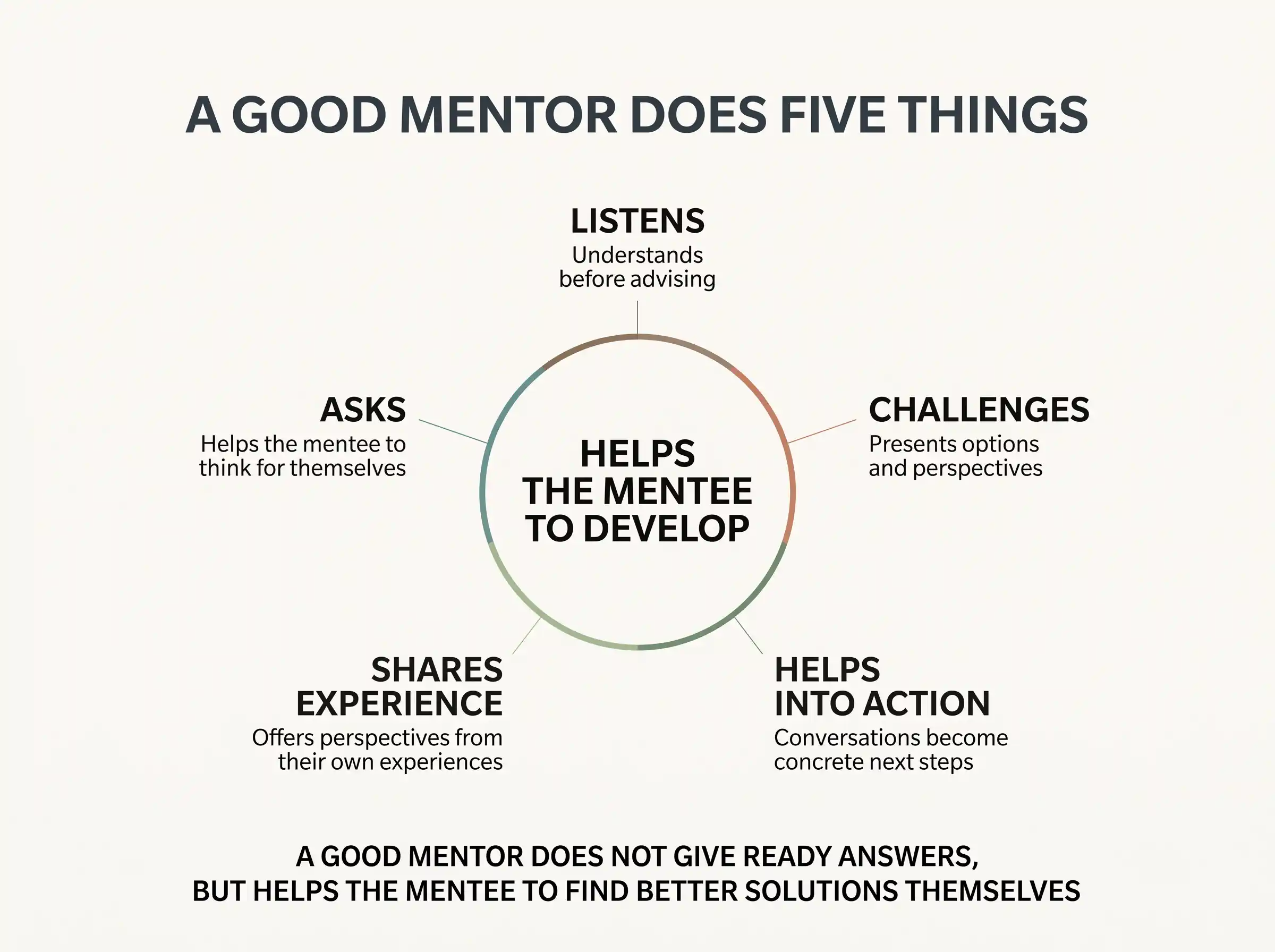
A mentor is an experienced professional who supports a mentee in achieving their own goals. A mentor shares their experience, asks questions, and offers perspective, but doesn't make decisions on the mentee's behalf. A mentor's job isn't to hand over ready-made answers — it's to help the mentee think more clearly and find their own solutions.
Mentoring is a two-way relationship built on sharing knowledge, experience, and networks to help the mentee grow both professionally and personally.
The definition of mentoring has evolved over time, but at its core, it has always been about passing knowledge from someone more experienced to someone less experienced. Modern mentoring isn't one-directional teaching — it's mutual learning, where the mentor benefits from the relationship too.
According to a Harvard Business Review article, mentoring is personal and helps people see strengths they didn't know they had, which is especially valuable in a competitive workplace.
A mentor isn't the same as a coach or a teacher. While a coach focuses on developing specific skills and a teacher shares knowledge, a mentor acts as a trusted thinking partner who helps the mentee find their own strengths and direction. Mentoring is an interactive process built on sharing knowledge, experience, and networks, but it doesn't provide ready-made answers. Instead, it encourages reflection and independent decision-making. A mentoring relationship often lasts 6–12 months, but can continue for years.
Mentoring has become a central way for organizations in Finland to develop expertise in the modern workplace, where sharing experience and personal guidance are key to both individual and organizational success.